Te Papa Tupu Programme

The Māori Literature Trust has set up a new incubator programme called Te Papa Tupu which gives six new Māori writers a chance to work on their manuscripts for six months. 

The winning participants were chosen from a total of 78 entries to the Papa Tupu competition. The winners are: Jacquie McRae, Jeremy Latimer, Larree Lust, Eru Hart, Mark Sweet, Tania Hinehou Butcher.      

Award-winning author Patricia Grace and seasoned publishing professional Daisy Coles were the judges for the competition, they had the following feedback to give on the competition:      

From Daisy Coles:
I was honoured to be asked to judge this competition. I’m grateful to Huia, to the Māori Literature Trust and to the writers whose imaginations it was my privilege to step into for a little while during the process. It was an interesting task and, in the end, not a straightforward one to pick six writers to be accepted into the mentoring programme.      

However, some entries definitely stood above the rest. For me, they were those that took me some place new, whether in terms of physical setting, human relationships or ways of looking at life in Aotearoa New Zealand – and took me there in a way that convinced me these new territories were worth knowing about.      

I think the reward this competition has offered is a fantastic one. One of the most valuable gifts a writer can get is the attention of somebody who will approach their work with an understanding of their motivation and a respect for their particular voice, but also a critical eye, with the aim of helping them ultimately share their unique vision with the rest of the world. Although I’m an editor by trade, so I would say that!      

I strongly believe that all writers should recognise the benefit of readers as they go through the creative process. This doesn’t have to mean the professional and practiced eye of a mentor. Family, friends or colleagues can all be roped in: anybody whose judgment a writer trusts – or who can at least be blackmailed into wading through a pile of double-spaced manuscript! A consciousness outside of your own can only be a good thing, even if the response you receive serves only the purpose of crystallising your own thoughts.      

From Patricia Grace
Generally speaking, on going through the pieces of writing, I could see a range of areas where mentoring could be of considerable advantage.      

One area in particular would be in character portrayal or development, where there is an overall tendency to tell us about the protagonists, rather than to show us who they are. It is by being shown – through thought processes, action, speech, reaction and responses, interaction with others or with the environment, that we come to know the fictional characters. This is how we come to an understanding as to feelings, emotions, life journeys of the people we are reading about.      

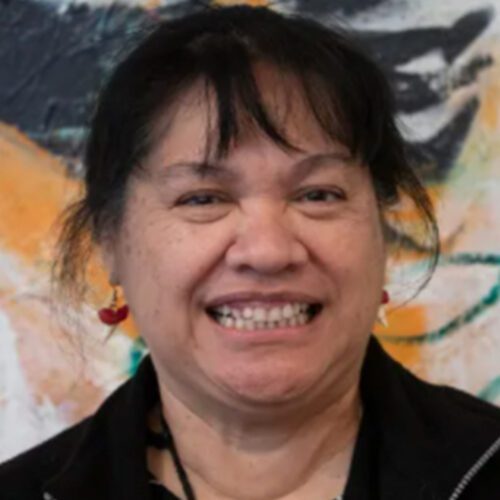
Patricia Grace

Patricia Grace talks about judging Te Papa Tupu entries at the NZ Portrait Gallery


 One story which I thought would probably become a novel for young readers, did this well, particularly with the main character. It is through her behaviour that we discover and feel her grief, her pain, her sense of loss and her alienation. There are other important characters, especially those of her mother and school friend, who with similar insight, would come alive to readers.      

In another entry, which is a set of short stories, we come to an understanding of character through thought processes and the character’s observations of the world, and particularly well done are strong emotive images of the landscape about him. Language is well used. Through these observations and perceptions we sense a kind of agony (though not despair) for which, as yet, we do not find the reasons.      

There is a novel entry, with exotic settings, which has a strong body of knowledge to do with time and place. It is fluent and well written and has a good storyline, definitely a work of fiction though I would describe it as journalistic in style. What I want to be shown is the hearts and minds of the characters. I want to know, (not just know about), the woman whose ashes are being delivered by her husband, across the world to China. I want to discover the depth of his being, so that the love story at the heart of the work can be deeply felt.      

One entry, described as a short story, but which could perhaps become a novel or novella, has three main characters – or seems to be building that way. It is character driven so it is important that we are shown who these people are and how they will interact with each other. It is a brief entry which shows promise.      

The need for characters to be brought to light applies to another novel where there is fluency of writing, and for the most part, the background knowledge necessary to inform a work of fiction. However, if cultural identity or the seeking of it is to be an underlying quest of a main character and a theme of the work, then it needs to be at the core of the work and understood to be heartfelt and invading. This does not mean that it has to overtake the story. But it can’t be just thrown in, or seemingly thrown in, because it will come across as superficial and insincere.      

As judges, neither of us had any hesitation in including a set stories for young readers put forward by one writer. These are stories of adventure, magic, intrigue, peopled by new Maori super heroes and villains. This was a very well presented entry which included bold and engaging illustrations.      

The only non-fiction entry to be selected promises to be a book which will be a worthy addition to our nation’s history of the World War Two years. It will be interesting to see how this academic writer will now turn her hand to presenting us with the stories of soldiers – all coming from a particular rural area – in a way which will be engaging to a general readership.      

Congratulations to all recipients. Very best wishes and aroha for the months ahead.      

Update on Te Papa Tupu      

The participants met with their mentors on Saturday 26th June to discuss their manuscripts. Mandy Hager, award-winning writer of children’s book The Crossing, gave an insightful one hour talk on the experiences of being a professional writer.       

The participants are now reworking and doing further research on their manuscripts. The Māori Literature Trust will be recording their journey on the online journal (featured in the side bar on the right).      

About the Programme      

Fledgling Māori writers were asked to submit into Te Papa Tupu competition an example of writing or a draft manuscript that they would like to work on for the duration of the six-month programme. Six writers were selected from 75 entries.      

During the programme, writers will work at home and submit work on a monthly basis to their mentor who will give advice on the direction of their manuscripts. Writers will also post their thoughts through an online journal posted (featured on the right).The programme has been brought about with the help of Huia Publishers, Creative New Zealand and Te Puni Kokiri.


Follow

Get every new post delivered to your Inbox.